Launch offer — valid today only

📄 Digital book in PDF · read it on your phone or print it

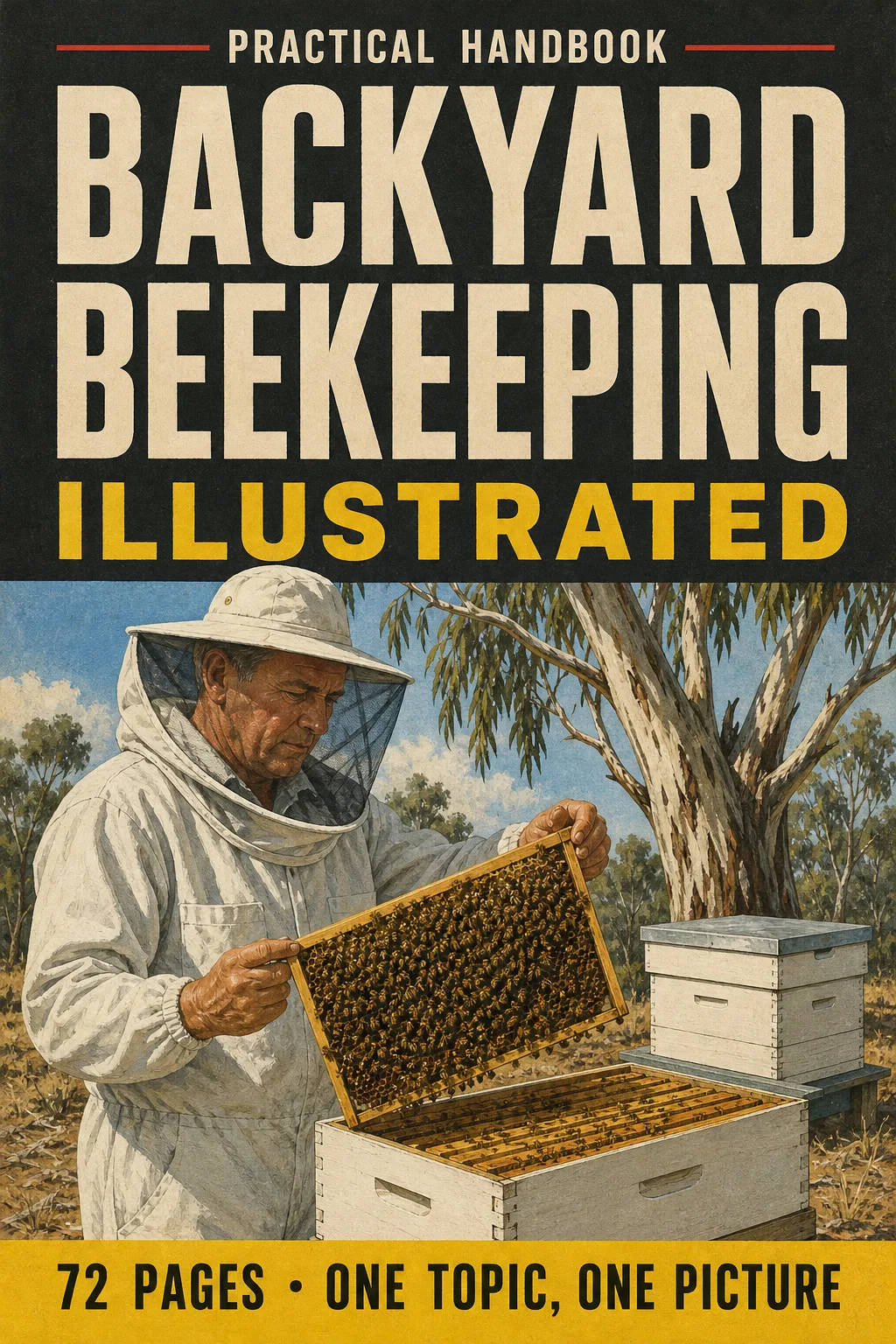
Backyard Beekeeping, Illustrated: Know What Every Frame Is Telling You One Hive Decision per Page

The Langstroth hive, the four-step inspection, egg-to-bee days, swarm cells, splits, honey harvest, small hive beetle, varroa checks and the rules in your state. Every topic has its own page: the drawing first, then what you need to remember. 72 illustrated pages.

SHOW ME HOW TO READ MY FRAMES

🔒 Secure checkout · PDF by email · 30-day guarantee

Every topic, its own pageEvery hive decision drawn, with the explanation beside it
72 illustrated pages8 parts, from the Langstroth hive to who to call, for what
Up-to-date sourcesBeeAware, the national bee biosecurity code and your state agriculture department
PDF by emailFormat

Look Inside the Book

Every page has a big drawing and a box with the days, signs and steps you need to know:

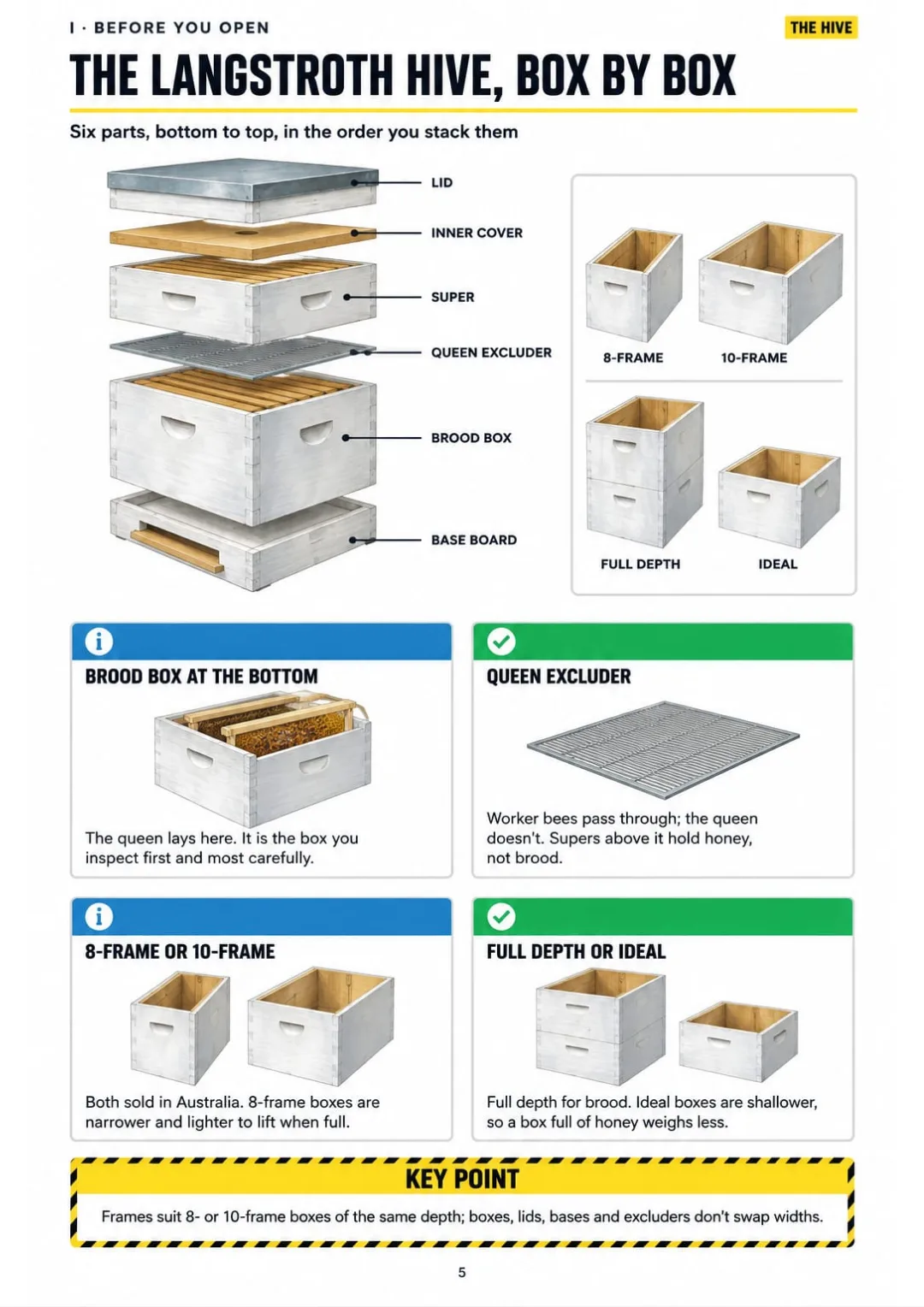
Base board, brood box, excluder, super, inner cover, lid: 8-frame vs 10-frame, full depth vs ideal.
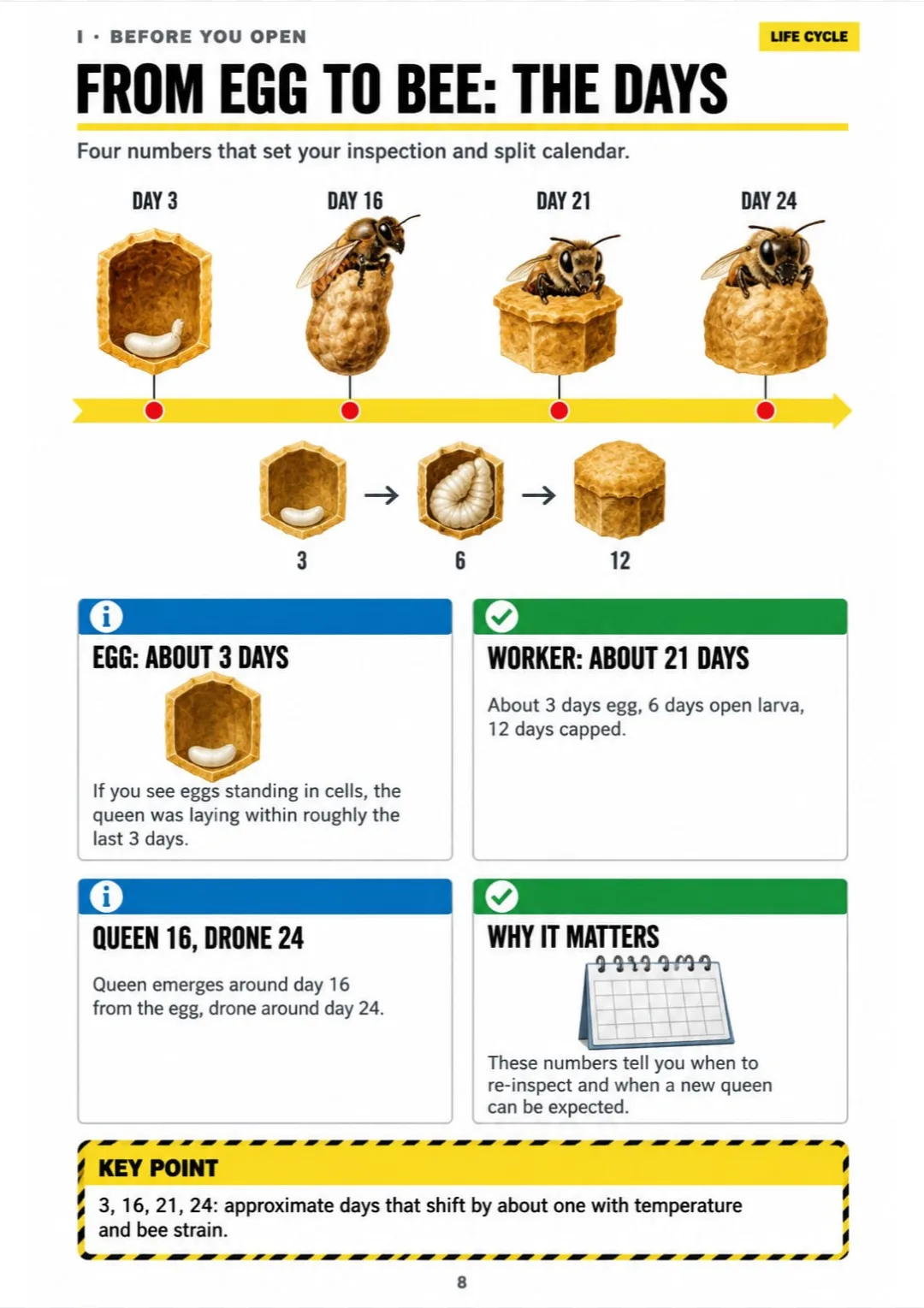
Egg hatches about day 3; queen emerges around day 16, worker 21, drone 24.
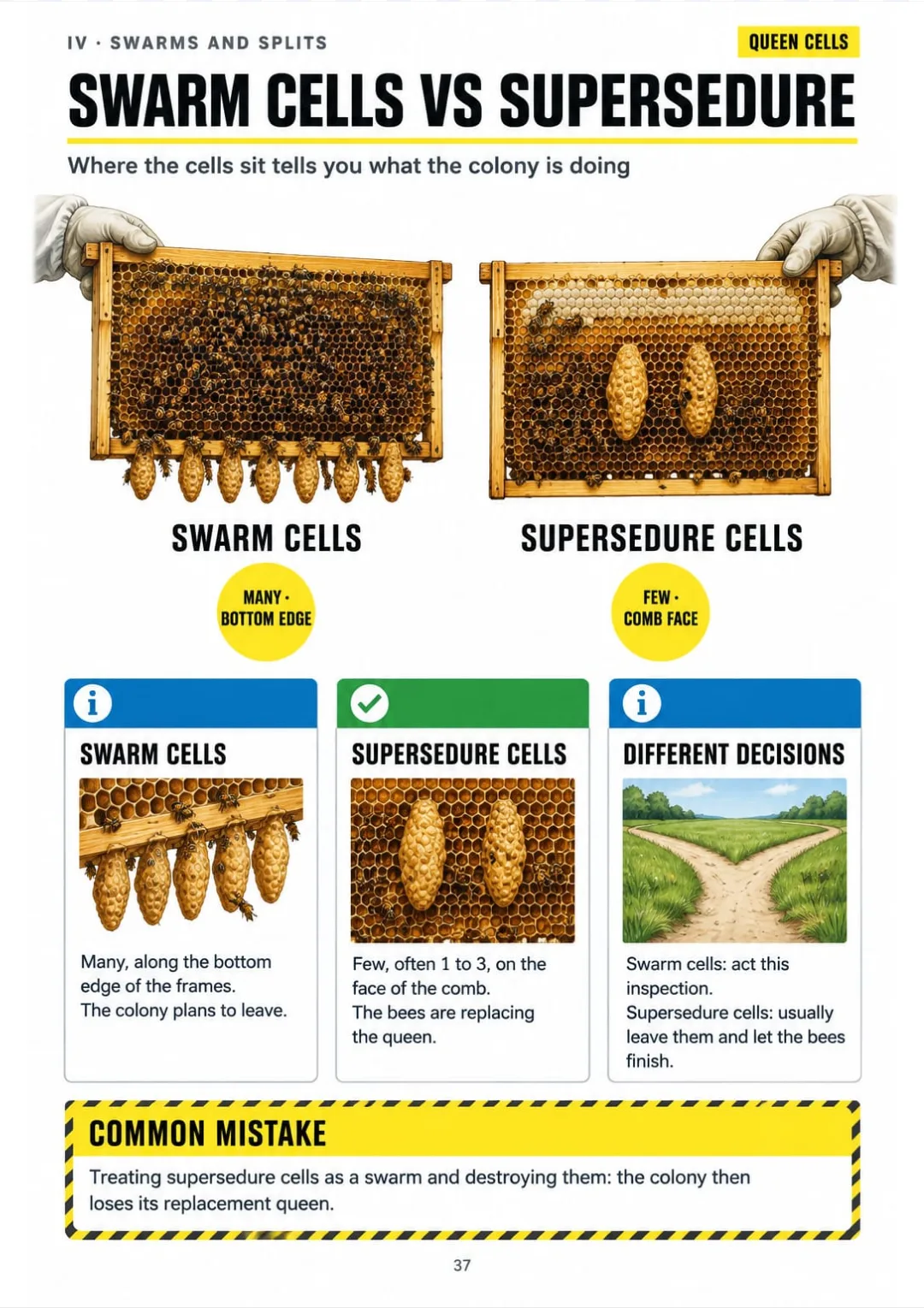
Swarm cells: many, bottom edge. Supersedure: 1–3, comb face
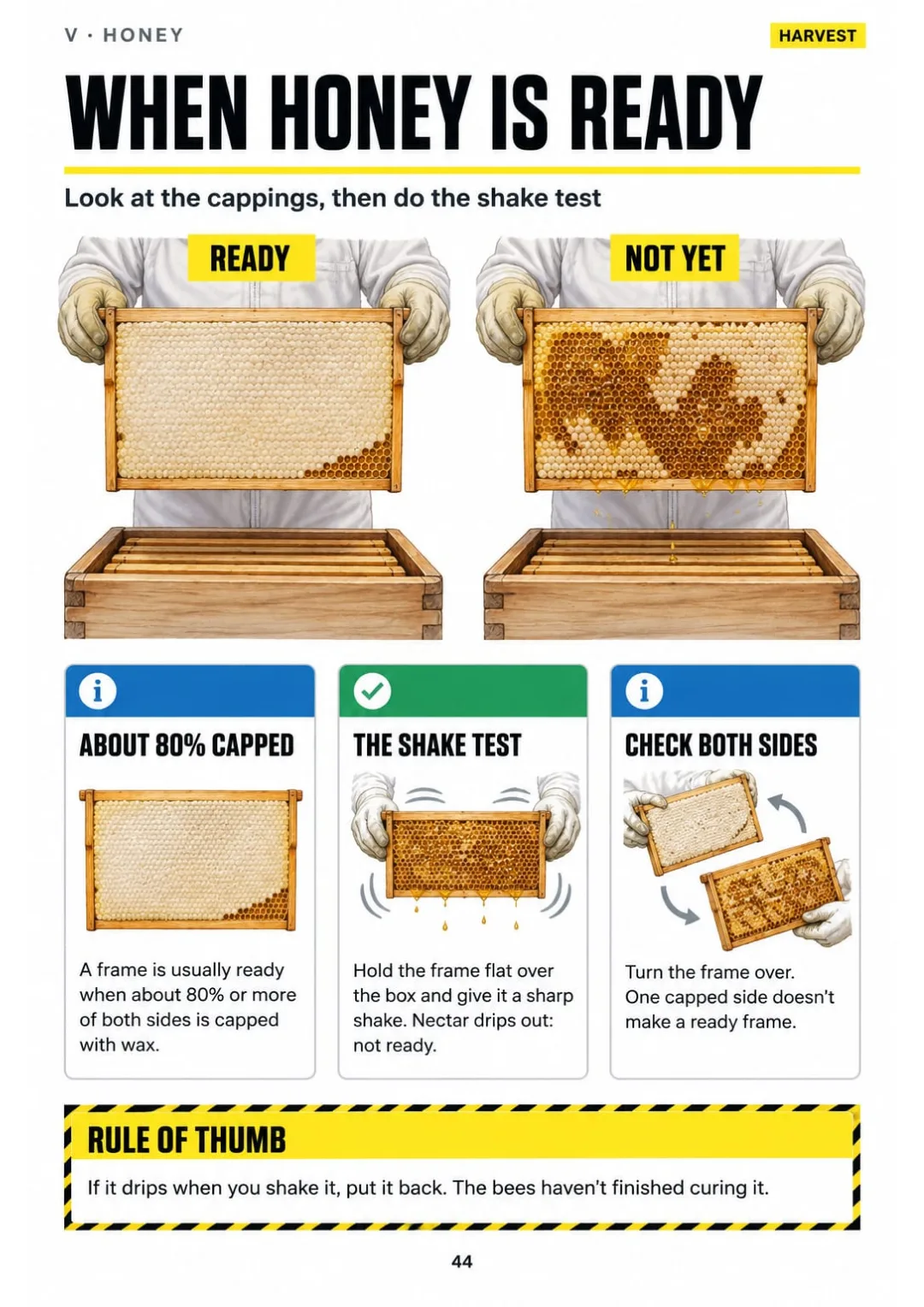
About 80% capped and nothing drips in the shake test: ready to harvest.
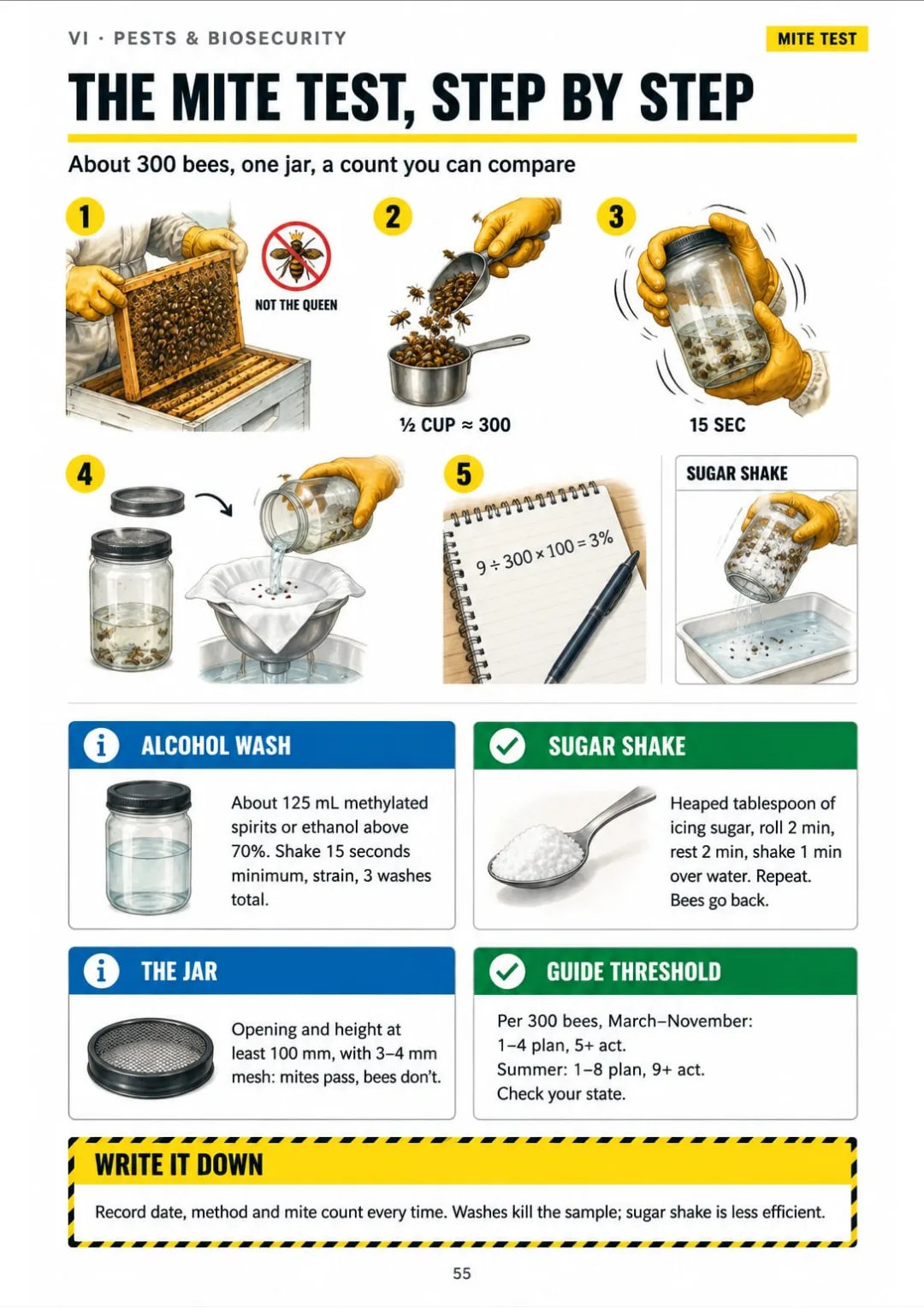
Mites ÷ bees × 100: 10 mites in 300 bees = 3%
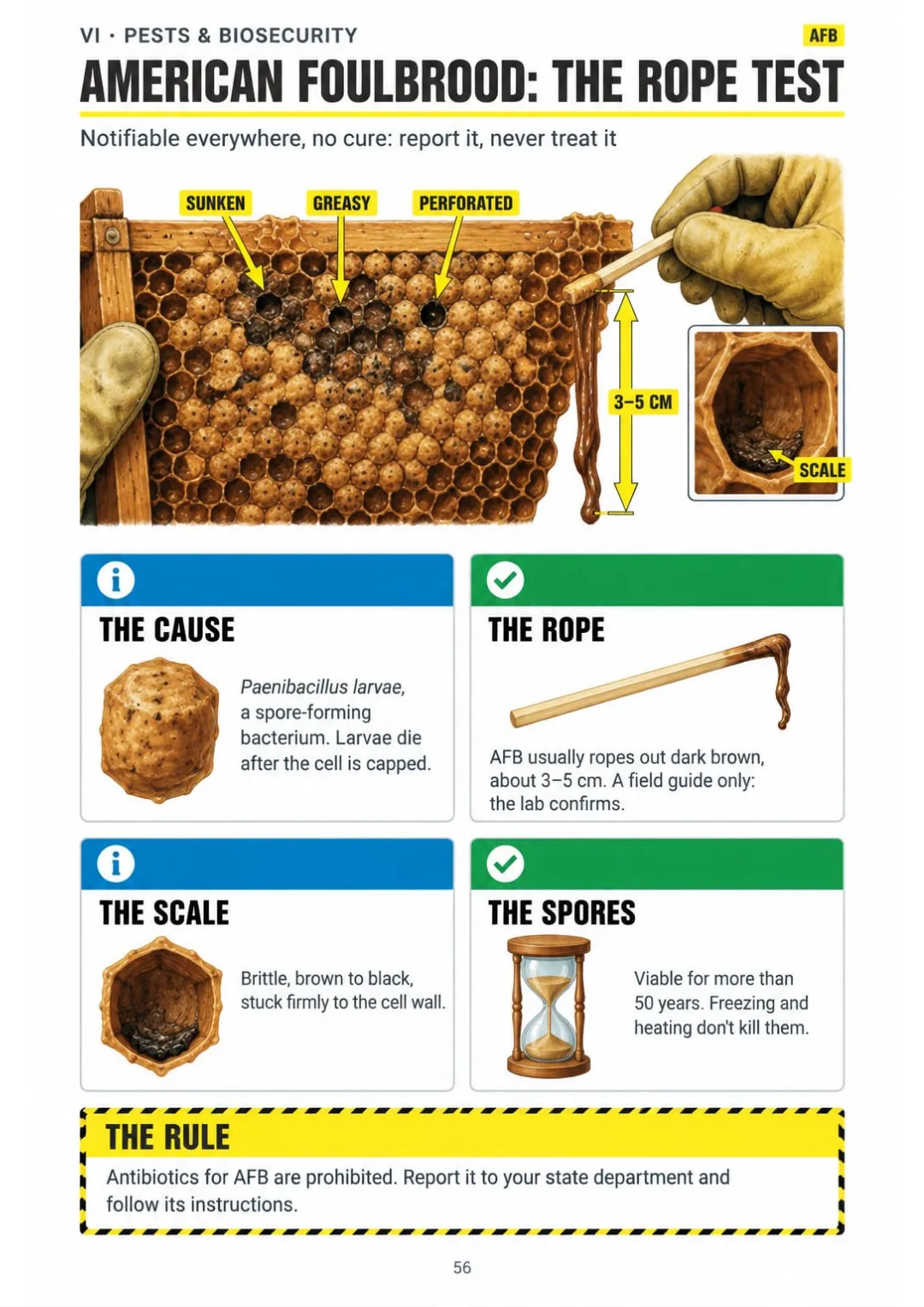
AFB: sunken greasy cappings, a 3–5 cm dark rope, spores viable 50+ years
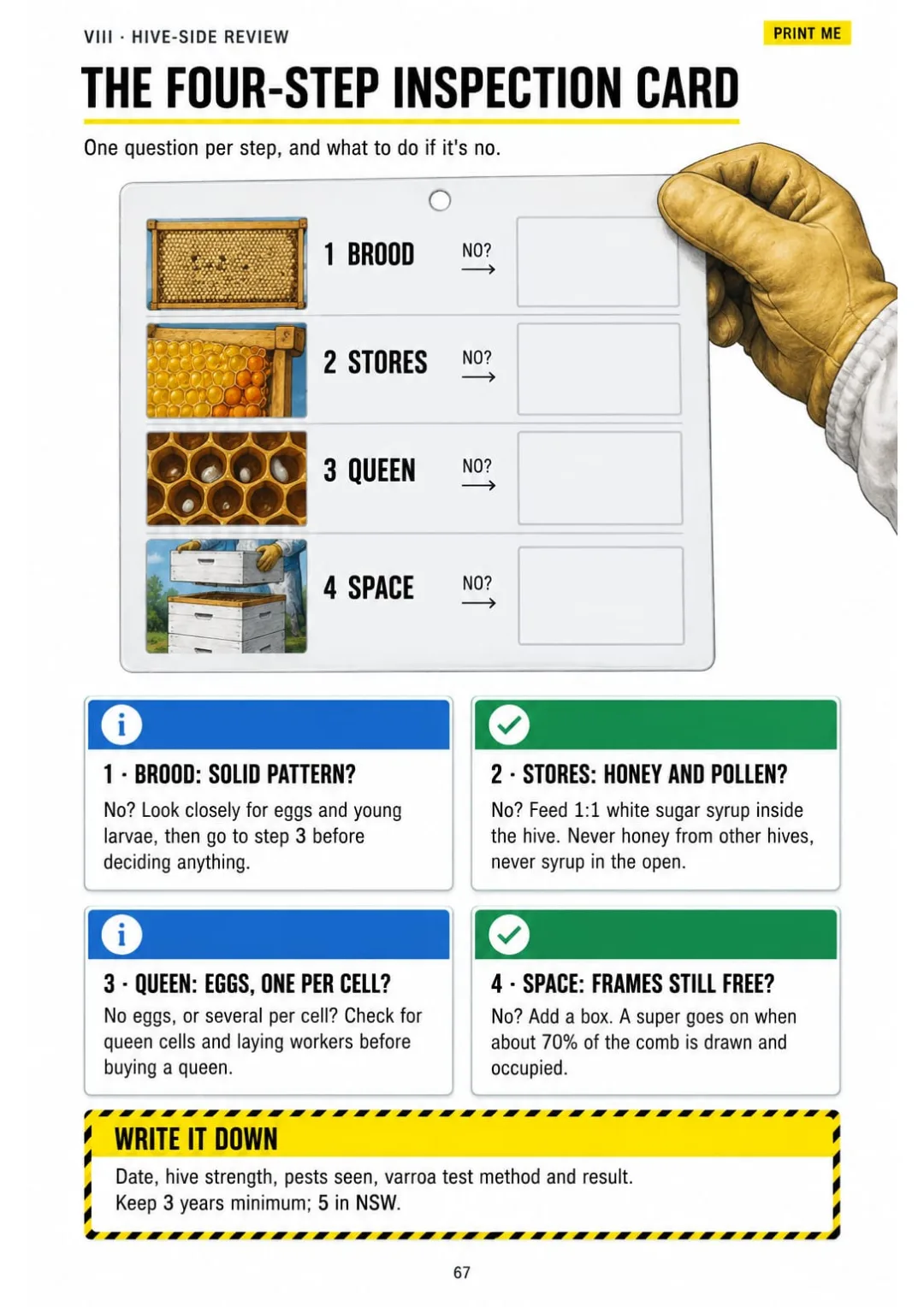
Brood, stores, queen, space: one question and one action per step
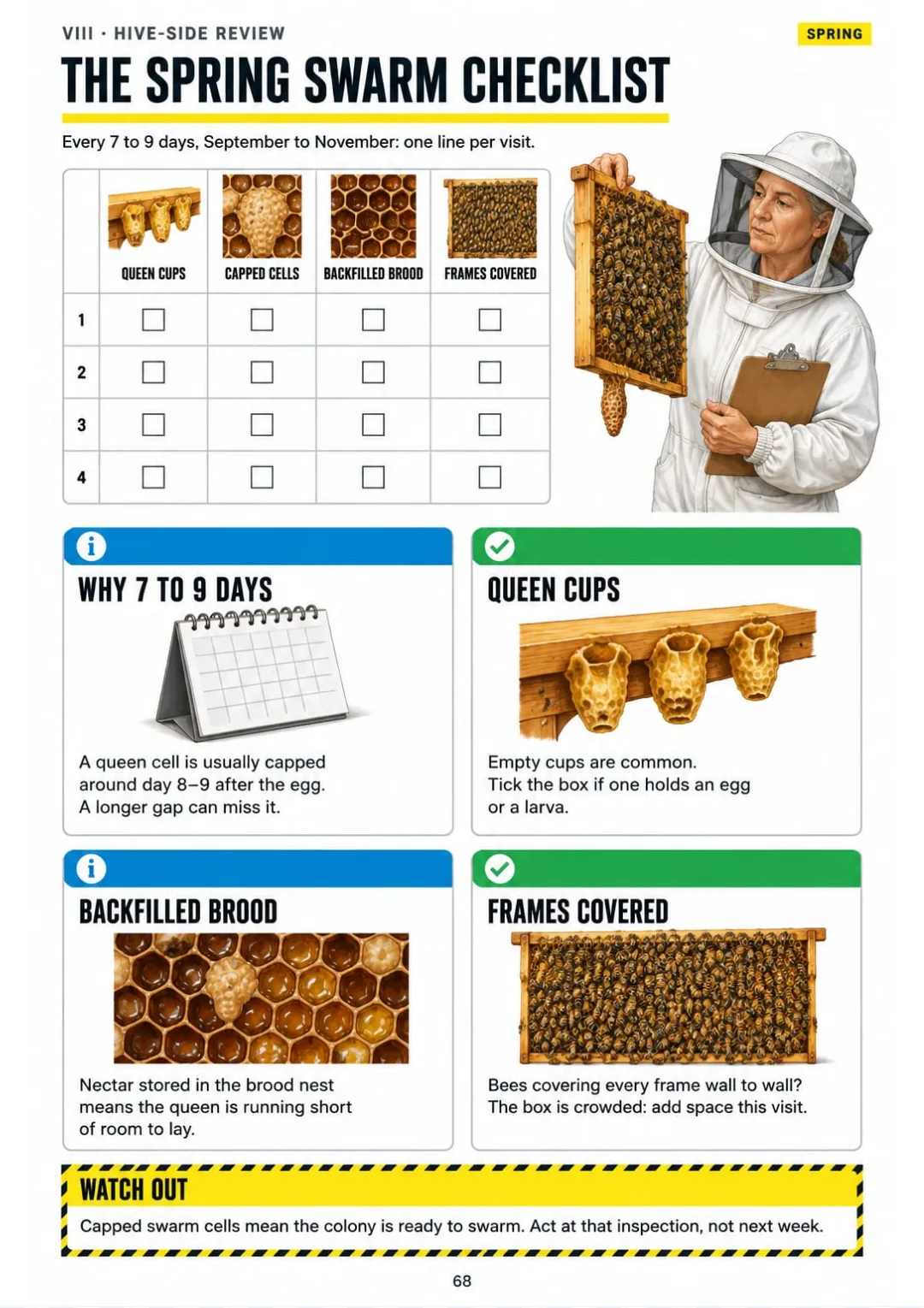
Queen cups, capped cells, backfilled brood, full frames: one line per visit

Swipe to see more →

These are real pages from the book. The table of contents is the full one: 8 parts and 68 topics.

The Problem Isn't You. It's How It Was Explained.

You're standing at the hive with a frame in your hands, and there are queen cells on the comb. The colony won't wait. Split now, or leave them alone?

Your old book covers swarm cells and supersedure cells in two long paragraphs, and the club gave you three different answers. With bees on your gloves, paragraphs don't help.

Swarm cells: many, bottom edge. Supersedure: 1–3, comb face

In this book it's one page: swarm cells drawn as many cells along the bottom edge, supersedure cells as one to three on the comb face, side by side, with what to do next.

The four-step inspection, the days from egg to bee, when honey is ready, the mite test and the American foulbrood rope test work the same way. Each one has its own page.

You look at the frame, you know what you're looking at, and you make the call without going back inside for the manual.

COMPARE FOR YOURSELF

The Same Topic, Two Ways to Learn It

THIS
  • The manual: line after line
  • Development days explained only in words
  • You open the hive still unsure
The developmental period of Apis mellifera varies according to caste. Following oviposition, the egg remains in the cell for approximately three days prior to eclosion, after which the larva is fed by nurse workers; the cell is subsequently capped and pupation proceeds. Total development time is approximately sixteen days for the queen, twenty-one days for the worker and twenty-four days for the drone, although these intervals may vary slightly with brood nest temperature and colony conditions, which has implications for the interpretation of queen cells during inspection.
FOR THIS
  • Egg to bee in one drawing
  • The days in a box: 3, 16, 21, 24
  • You see it and it makes sense
Egg hatches about day 3; queen emerges around day 16, worker 21, drone 24.
CONTENTS

Take a Look at the 8 Parts and 68 Topics

Before you open the hive, the four-step inspection, the Australian beekeeping year, swarms and splits, honey, pests and biosecurity, the rules in your state and a hive-side review: 72 pages, all illustrated

IBefore You Open the Hive · pp. 5-15
  1. The Langstroth hive, drawn box by box
  2. One frame, both sides
  3. Queen, worker, drone: tell them apart
  4. From egg to bee: the days that matter
  5. Worker, drone and queen cells
  6. Your protective gear
  7. The smoker: lit, cool, white
  8. Hive tool and frame handling
  9. Where to put the hive
  10. Water and the neighbours
  11. When to open and when to wait
IIThe Inspection in Four Steps · pp. 16-26
  1. The same order, every time: brood, stores, queen, space
  2. Opening without chaos
  3. Step 1 · Brood: the pattern
  4. Step 1 · Brood: eggs and young larvae
  5. Step 2 · Stores: honey and pollen
  6. Step 3 · Queen: you don't need to see her
  7. Step 3 · Queenless or laying workers
  8. Step 4 · Space: when to add a box
  9. Not crushing the queen
  10. Closing and writing it down
  11. Temperament: calm or hot
IIIThe Australian Beekeeping Year · pp. 27-34
  1. Your climate, your calendar
  2. Late winter (July–August): the quiet check
  3. Spring (September–November): the build-up
  4. Summer (December–February): flow and heat
  5. Autumn (March–May): getting ready for winter
  6. Winter (June–August): leave them alone
  7. Reading the local flow
  8. When and how to feed
IVSwarms and Splits · pp. 35-43
  1. Why bees swarm
  2. The early signs, frame by frame
  3. Swarm cells vs supersedure cells
  4. Capped queen cells: the clock is running
  5. Preventing a swarm: add space
  6. The walk-away split
  7. Split with the old queen
  8. After the split: the weeks to wait
  9. A swarm in the tree
VHoney · pp. 44-51
  1. When honey is ready
  2. Moisture: why 'capped' matters
  3. How much to leave the bees
  4. Clearing bees off the super
  5. Uncapping and extracting at home
  6. Strain, settle, jar
  7. Crystallised honey is not spoiled
  8. Wet frames and cappings
VIPests, Disease and Biosecurity · pp. 52-60
  1. Small hive beetle: know it on sight
  2. Small hive beetle: keep it in check
  3. Varroa: what it is and where it is
  4. Checking for varroa: alcohol wash and sugar shake
  5. American foulbrood: the rope test
  6. European foulbrood, chalkbrood and sacbrood
  7. Wax moth and robbing
  8. Exotic threats to report
  9. Hive hygiene in five habits
VIIThe Rules in Your State · pp. 61-66
  1. Registering as a beekeeper
  2. Branding your hive
  3. The national biosecurity code in plain words
  4. Keeping records that count
  5. Council rules and neighbours
  6. Moving bees and buying gear
VIIIHive-Side Review · pp. 67-72
  1. The four-step inspection card
  2. The spring swarm checklist
  3. Decision page: split or not?
  4. Decision page: harvest or leave it?
  5. The most common beginner mistakes
  6. Who to call, for what

One Page, One Topic, All Clear

Think of it this way:

It's spring, the flow is starting and you're at the hive with the lid off. You need to know whether this colony is getting ready to swarm.

You open the book at the spring swarm checklist and there it is, drawn: queen cups, capped cells, backfilled brood, full frames, one line per visit.

Mites ÷ bees × 100: 10 mites in 300 bees = 3%

The same goes for the Langstroth hive box by box, the days from egg to bee, when honey is ready, the mite test and small hive beetle. Each one has its own page.

Backyard Beekeeping Illustrated is 8 parts and 68 topics, all drawn, and it finishes with hive-side cards, two decision pages and a page on who to call, for what.

What you see drawn, you don't have to memorize.

What's Inside Backyard Beekeeping Illustrated:

Ipp. 5-15

Before You Open the Hive

You recognise every part of the hive and every bee at a glance: the Langstroth box by box, both sides of a frame, queen, worker and drone, egg-to-bee days, your smoker and hive tool, and where to put the hive.

IIpp. 16-26

The Inspection in Four Steps

Every inspection in the same order, so nothing gets missed: opening calmly, brood pattern, eggs and young larvae, stores, queen or queenless signs, when to add a box, and closing up without crushing the queen.

IIIpp. 27-34

The Australian Beekeeping Year

Your climate and calendar: the late-winter check, the spring build-up, summer flow and heat, autumn preparation, leaving them alone in winter, reading the local flow and when to feed.

IVpp. 35-43

Swarms and Splits

Why bees swarm, the early signs frame by frame, swarm cells vs supersedure cells, capped queen cells, adding space, the walk-away split, the split with the old queen, the weeks after and a swarm in the tree.

Vpp. 44-51

Honey

When honey is ready, why capping matters for moisture, how much to leave the bees, clearing the super, uncapping and extracting at home, strain, settle and jar, crystallised honey and wet frames.

VIpp. 52-60

Pests, Disease and Biosecurity

Small hive beetle on sight and in check, varroa and the mite test, the American foulbrood rope test, other brood diseases, wax moth and robbing, exotic threats to report and five hygiene habits.

VIIpp. 61-66

The Rules in Your State

Registering as a beekeeper, branding your hive, the national biosecurity code in plain words, records, council rules and neighbours, and moving bees and buying gear, each pointed to your state agriculture department.

VIIIpp. 67-72

Hive-Side Review

The four-step inspection card, the spring swarm checklist, the split-or-not and harvest-or-leave decision pages, the most common beginner mistakes and who to call, for what.

At the end of the book: Hive-side cards, two decision pages (split or not, harvest or leave it) and a who-to-call page.
Plus: 2 Free Books

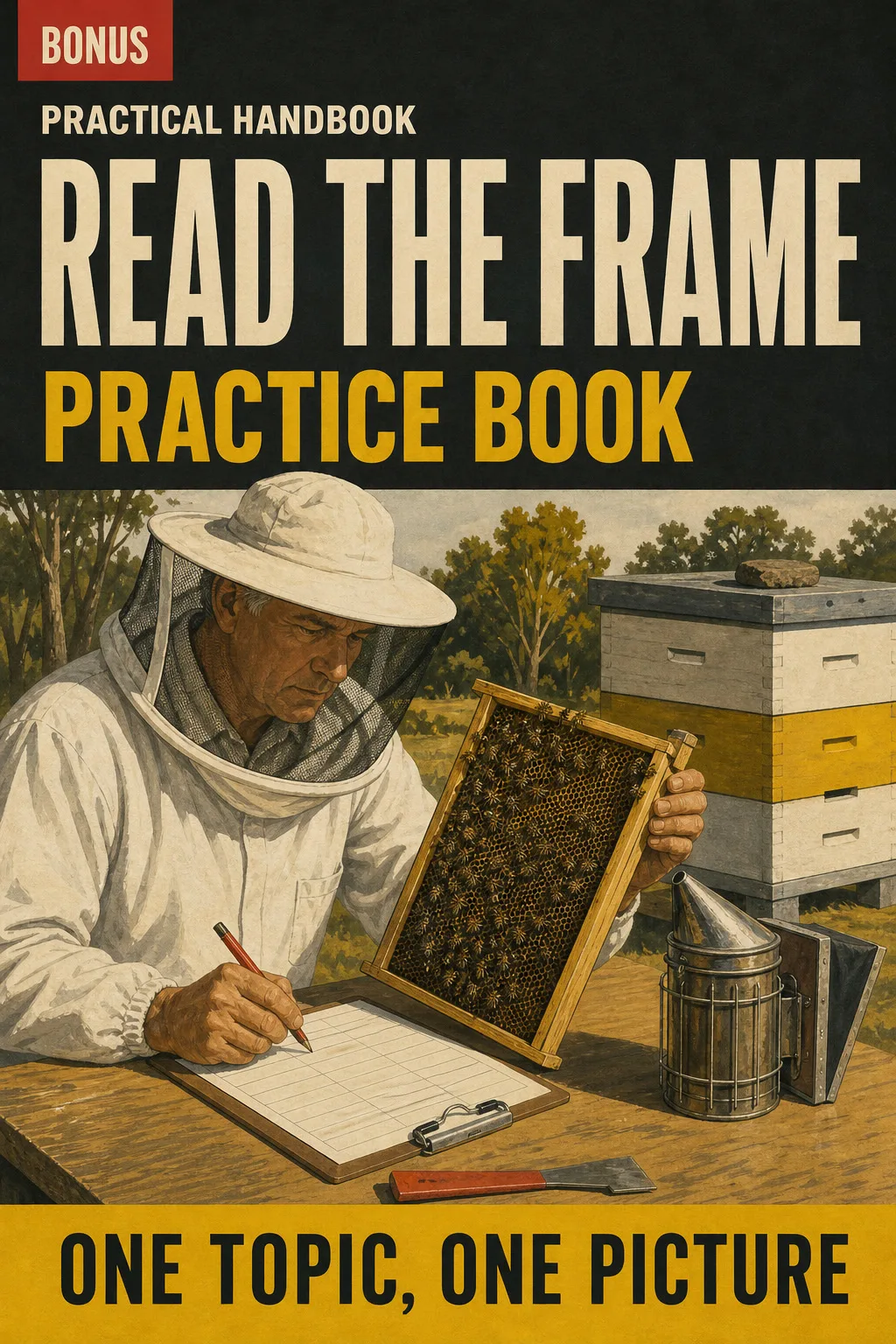
Read the Frame: Practice Book

BONUS 1: «Read the Frame: Practice Book»

Value on its own: US$ 17.90

Look at drawn frames and make the call yourself — brood pattern, stores, swarm cells or supersedure cells — then check your answer on the next page.

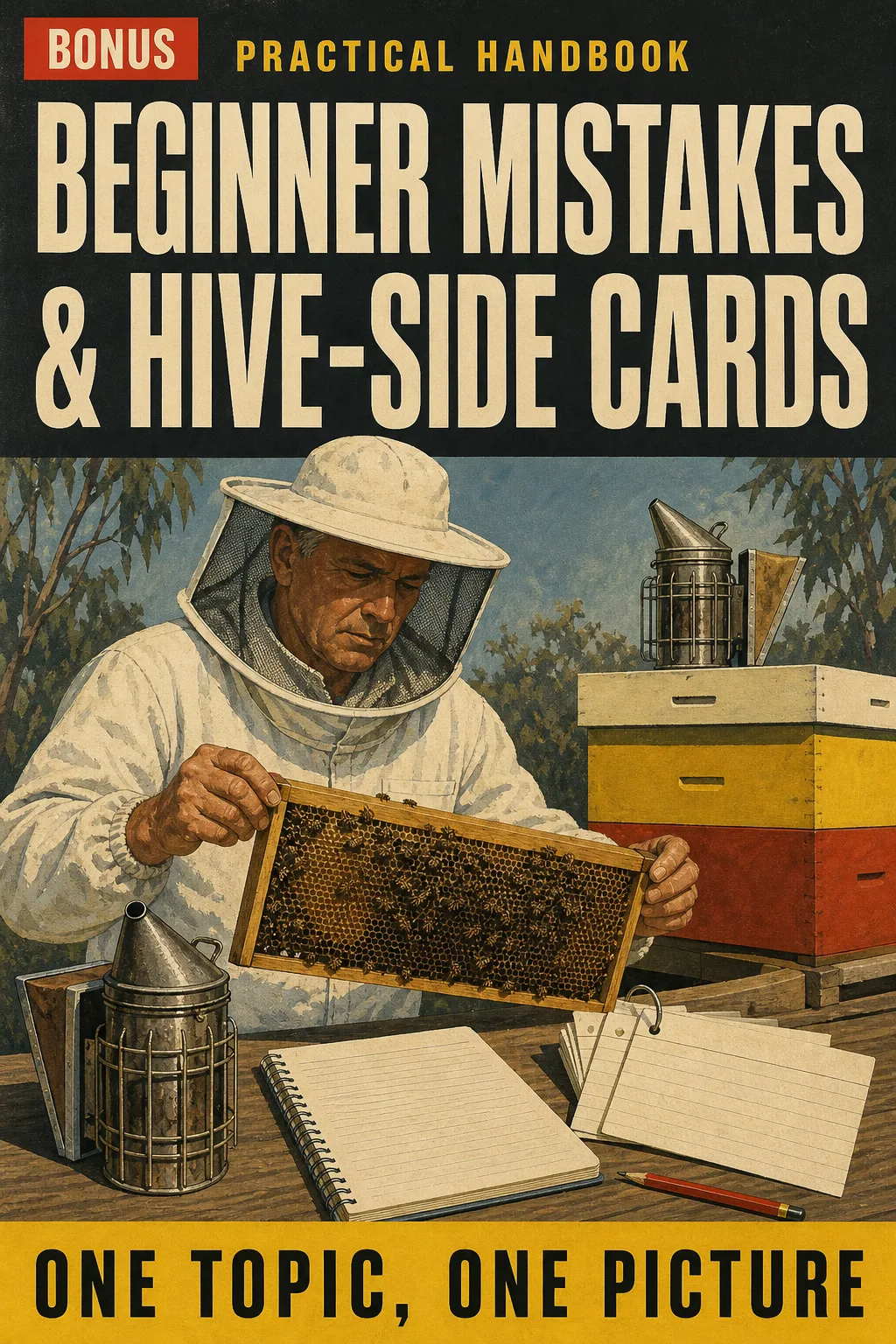
Beginner Mistakes & Hive-Side Cards

BONUS 2: «Beginner Mistakes & Hive-Side Cards»

Value on its own: US$ 14.90

The mistakes new beekeepers make most often, each one next to what to do instead, plus printable cards to keep in your bee box.

Backyard Beekeeping Illustrated with 2 Free Books

  • Backyard Beekeeping Illustrated: 72 illustrated pagesUS$ 63
  • BONUS 1: Read the Frame: Practice BookUS$ 17.90
  • BONUS 2: Beginner Mistakes & Hive-Side CardsUS$ 14.90
  • High-resolution PDF to printIncluded
Total value US$ 95.80
YOUR PRICE:
US$ 27
You save US$ 68.80
YES, I WANT BACKYARD BEEKEEPING ILLUSTRATED FOR US$ 27

📄 This is a digital PDF book sent to your email: nothing is printed or shipped.

Secure purchaseEncrypted payment30-day guarantee

PDF by email: We email you Backyard Beekeeping Illustrated as a PDF, together with the two free books. It's a single payment: no installments, no extra charges.

Who This Book Is For

You're getting your first hive

You're getting your first hive

Before you open the box, you see what an inspection looks like and what each frame should show you. You start with the same order the book uses: brood, stores, queen, space.

Swarm season has started

Swarm season has started

With the swarm checklist and the swarm vs supersedure page in hand, you know what to look for this visit and when a split makes sense.

You've kept bees for a season or two

You've kept bees for a season or two

You stop relying on whichever mentor you spoke to last. Honey readiness, the mite test and biosecurity are each on one page, ready to print and keep in your bee box.

Everything You Get Today

US$ 95.80US$ 27
YES, I WANT BACKYARD BEEKEEPING ILLUSTRATED FOR US$ 27

📄 This is a digital PDF book sent to your email: nothing is printed or shipped.

30DAYS
GUARANTEE

30-Day Guarantee

Try Backyard Beekeeping Illustrated for 30 days, bonus books included.

We refund everything if the file won't open, if the book isn't what you see here, if you were charged twice or if the email doesn't arrive. Just email us.

You pay once. No subscriptions.

Frequently Asked Questions

Is it for me if I've got one to three hives and I'm in my first or second season?

Yes. It's written for Australian backyard beekeepers with a few Langstroth hives. If you've already kept bees for a year, the inspection order, the swarm pages and the decision pages are the parts you'll use most.

Where does the content come from?

It's checked against the national BeeAware guidance, the Australian Honey Bee Industry Biosecurity Code of Practice and the beekeeping pages of the state agriculture departments. Rules that change by state, and the current varroa situation, point you to your state agriculture department.

Is it official material?

No. It's an independent illustrated book. It isn't issued, approved or endorsed by any government body or industry organisation.

Does it replace a beekeeping course or my club?

No. It's study material that sits alongside a hands-on course, your club and your mentor. For stings and allergies, follow your action plan and your doctor's advice, and call 000 in an emergency.

Does it work for my state and the current varroa situation?

Yes. The seasons, the flow, small hive beetle and the pests are written for Australian backyard hives. Varroa is now established in parts of eastern Australia, and the testing and reporting rules differ by state and keep changing. So the book shows you how to do the mite test and record it step by step, and each rules page tells you which state department to check for what applies to you today.

When and how does it arrive?

The book and the 2 bonus books arrive as PDFs by email, at the address you enter at checkout.

Do I have to pay every month?

No. It's a one-off payment. No subscription.

Can I have it on paper?

Yes. The PDF is made to print at home or at a print shop. The hive-side cards are laid out to print on their own, so you can keep them in your bee box and take them to the hive.

How does the refund work?

You have 30 days. We refund everything if the file won't open, if the book isn't what you see on this page, if you were charged twice or if the email doesn't arrive: just email us.

Before You Close This Page

No more rereading without anything sticking.

Swarm cells or supersedure: you see them drawn and you know.

You get to the hive knowing where everything is.

Drawings make studying faster.

The book is right below.

One-time payment: US$ 27 · Guarantee: 30 days · PDF by email

YES, I WANT BACKYARD BEEKEEPING ILLUSTRATED FOR US$ 27

📄 This is a digital PDF book sent to your email: nothing is printed or shipped.